AI, Teaching, and Assessment
How should universities teach, assess, and mentor in an age of capable AI? I study faculty attitudes, adoption patterns, and practical ways to integrate AI without weakening student learning.
University of North Carolina Wilmington
Professor of Psychology at UNC Wilmington connecting cognitive science, teaching, and responsible AI tool-building for higher education.
About
I started at UNC Wilmington as an undergraduate, double-majoring in Psychology and Philosophy & Religion. That pairing of mechanism and meaning has shaped my work in neuroscience, teaching, and artificial intelligence.
I earned my Ph.D. in Psychology, with a behavioral neuroscience concentration, at the University of Colorado Boulder, training with Steven Maier and Jerry Rudy. I returned to UNCW as a faculty member in 1990.
My earlier research examined neuroplasticity, hippocampal neurogenesis, memory, cardiac surgery and cognition, neurofeedback, addiction recovery, and concussion assessment technology. My current work focuses on AI in higher education and the cognitive science of artificial systems.
After seven years chairing the Department of Psychology, I returned to faculty work with new questions about cognition, learning, and human-AI collaboration.
Career Timeline
Research
My current work is organized around two questions: how AI is changing higher education, and what cognitive psychology can reveal about artificial systems.
How should universities teach, assess, and mentor in an age of capable AI? I study faculty attitudes, adoption patterns, and practical ways to integrate AI without weakening student learning.
I apply the tools of cognitive psychology to AI systems: how they learn, remember, generalize, and fail, and where artificial systems diverge from human cognition.
NIMH R01-funded work on how new neurons added to the adult hippocampus contribute to learning, memory, and recovery after brain injury, combining electrophysiology, immunohistochemistry, confocal microscopy, and behavioral analysis.
Keith, Priester, Ferguson & Salling (2008). Behavioural Brain Research, 188, 391-397. Keith & Rudy (1990). Psychobiology, 18, 251-257.NHLBI-funded studies examined cognitive outcomes related to cardiopulmonary bypass surgery and helped clarify risks in serial neuropsychological assessment.
Keith, Puente, Malcolmson, Tartt, Coleman & Marks (2002). Neuropsychology, 16, 411-421. Keith, Cohen & Lecci (2007). The Annals of Thoracic Surgery, 83, 370-373.Randomized, sham-controlled trials of automated EEG biofeedback in adults with ADHD, residents of a substance-use treatment facility, and veterans with TBI and PTSD using mobile neurofeedback for pain management.
Keith, Rapgay, Theodore, Schwartz & Ross (2015). Psychology of Addictive Behaviors, 29, 17-25. Elbogen et al., incl. Keith (2021). Pain Medicine, 22, 329-337.Validation work on accelerometer-based gait assessment and screening batteries for concussion in children, adolescents, and adults, including machine-learning models for neuropsychological research.
Keith, Williams, Taravath & Lecci (2019). A Clinician's Guide to Machine Learning in Neuropsychological Research and Practice. Journal of Pediatric Neuropsychology, 5, 177-187. Lecci et al., incl. Keith (2023). Journal of Concussion.Work on mindfulness and attention, psychometric instruments for interpersonal emotion, and contemplative practice and human enhancement.
Rapgay, Conchar & Keith (2025). Development and Validation of the Interpersonal Hate Questionnaire. Lifecycle Journal, 1. Keith, Blackwood, Mathew & Lecci (2017). Mindfulness, 93, 765-774. Keith (2018). Buddhist Biohackers: The New Enlightenment. In Posthumanism: The Future of Homo Sapiens. Macmillan.Grant Support
Three decades of federally funded work as principal investigator, spanning hippocampal neurogenesis, neurofeedback, and cognitive assessment after cardiac surgery.
Functional Aspects of Adult Hippocampal Neurogenesis
A Placebo-Control Evaluation of Neurofeedback Efficacy in Adults with ADHD
CPB Effects on Neuropsychological Performance
The Seahawk Brainwave and Attention Training Clinic
A New Approach at Identifying Patterns of Cognitive Decline in Patients with Dementia of the Alzheimer’s Type
Proposal to obtain laser scanning confocal microscope
Stimulating Plastic Processes to Facilitate Functional Restitution after Cortical Stroke
Drugs of Abuse and Complex Behavior
Teaching
My teaching emphasizes critical thinking, research methods, cognitive neuroscience, and the practical use of AI as a learning partner.
Currently teaching
Frequent talks for the Osher Lifelong Learning Institute, UNCW's Center for Innovation and Entrepreneurship, Cucalorus Connect, and area Rotary and Kiwanis clubs on brain health, Buddhism and modern psychology, and AI.
AI Projects
Custom GPTs built for teaching, research support, AI literacy, and practical agent design. Each tool is meant to help users think through a task, not simply outsource it.
Helps students turn research ideas into stronger experimental designs by clarifying hypotheses, variables, controls, and the logic of a well-built study.
Guides students through choosing, running, and interpreting analyses in jamovi, from t-tests to regression.
Creates simulated lab experiences so students can practice research decisions, measurement, and interpretation when they cannot be at the bench.
Supports the Buddhism and Modern Psychology course by helping students connect Buddhist psychology, contemplative practice, and cognitive science.
Helps users practice listening, asking better questions, and matching their response to the conversation they are actually in.
Extends Elon University's Human Wisdom for the Age of AI with a companion GPT built with Elon's permission.
Coaches students, faculty, staff, and administrators through designing useful custom AI assistants across ChatGPT, Gemini, Claude, and Microsoft Copilot.
Helps users examine questions, ideas, and current events through context, inquiry, and competing interpretations rather than quick conclusions.
A guide for making sense of AI without hype or panic. It helps users distinguish evidence from possibility, prediction, and argument while examining AI’s effects on learning, work, privacy, democracy, human agency, and risk.
GAABS
GAABS, the Generative AI Agent Builders Studio, is the applied tool-building arm of UNCW's AI Hub. GAABS helps faculty, staff, and students turn responsible AI ideas into practical tools, workflows, agents, and learning resources that support teaching, research, operations, and student success.
GAABS is for members of the UNCW community who want to build, test, document, or share useful AI projects within appropriate policy, privacy, and data-use boundaries.
To participate, share a use case, submit a project idea, join a buildathon, or ask about collaboration by emailing gaabs@uncw.edu.
Personal
A short personal note for visitors who want a fuller picture beyond teaching and research.
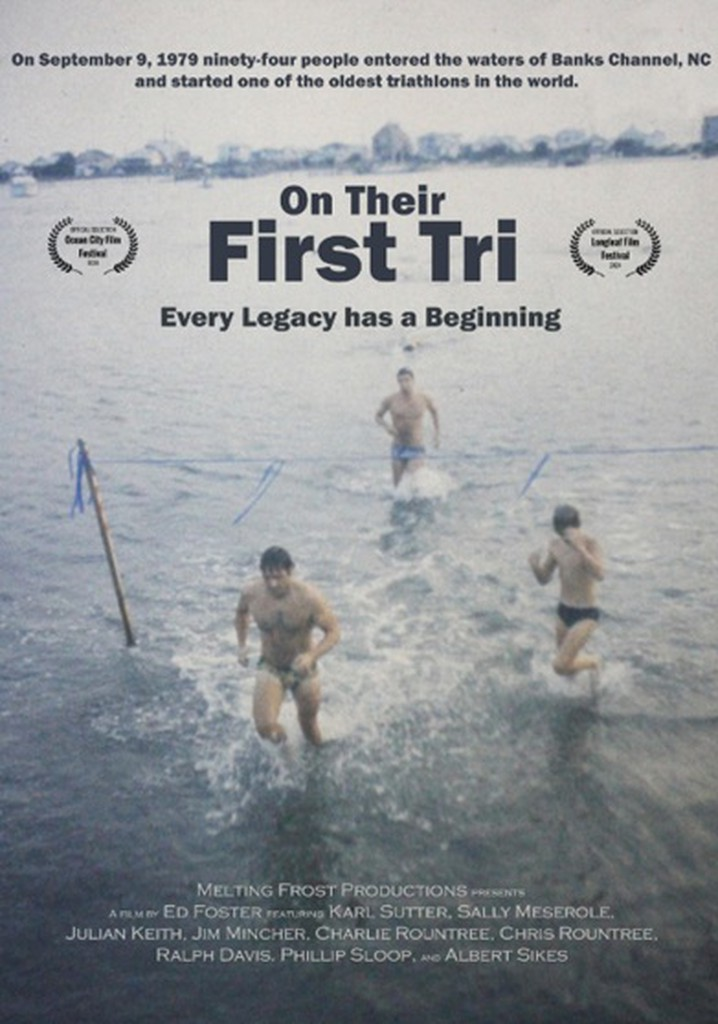
On September 9, 1979, ninety-four racers waded into Banks Channel at Wrightsville Beach for one of North America's first triathlons. I was one of them. That same year I ran my first marathon, qualified for Boston as a teenager, and ran the Boston Marathon the following spring.
The 1979 race and nine of its original competitors are the subject of the 2024 documentary On Their First Tri.
Watch the documentary | View on IMDb
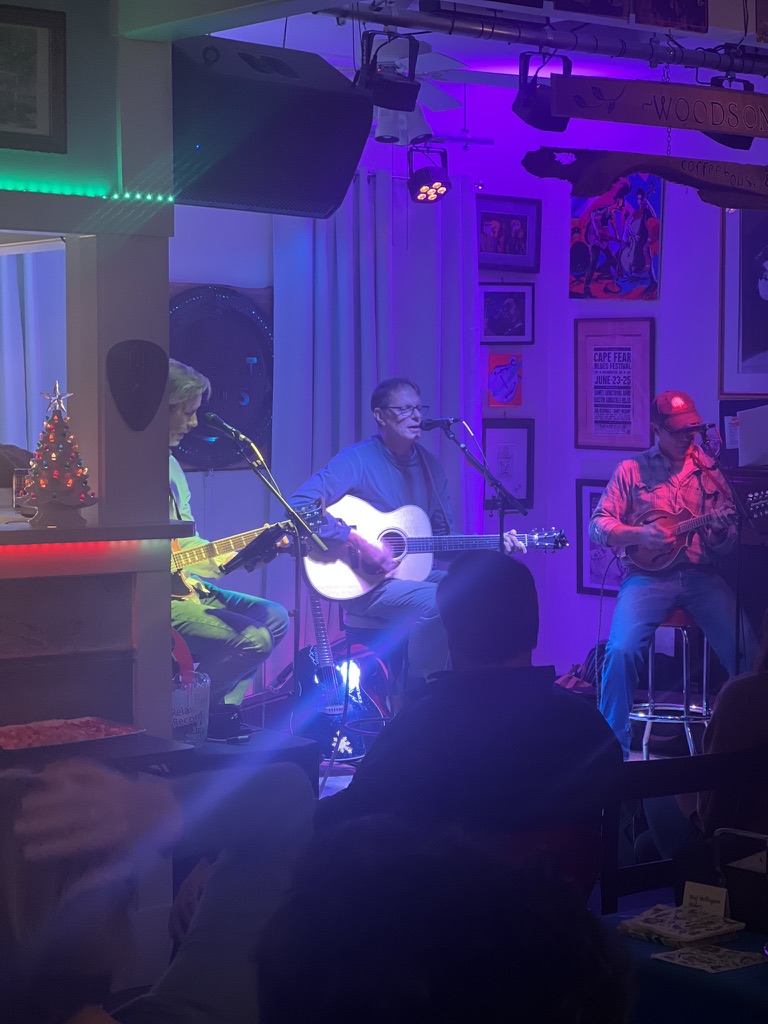
I am a member of The Noseeums, a Wilmington band playing y'allternative music around town a few times a month.
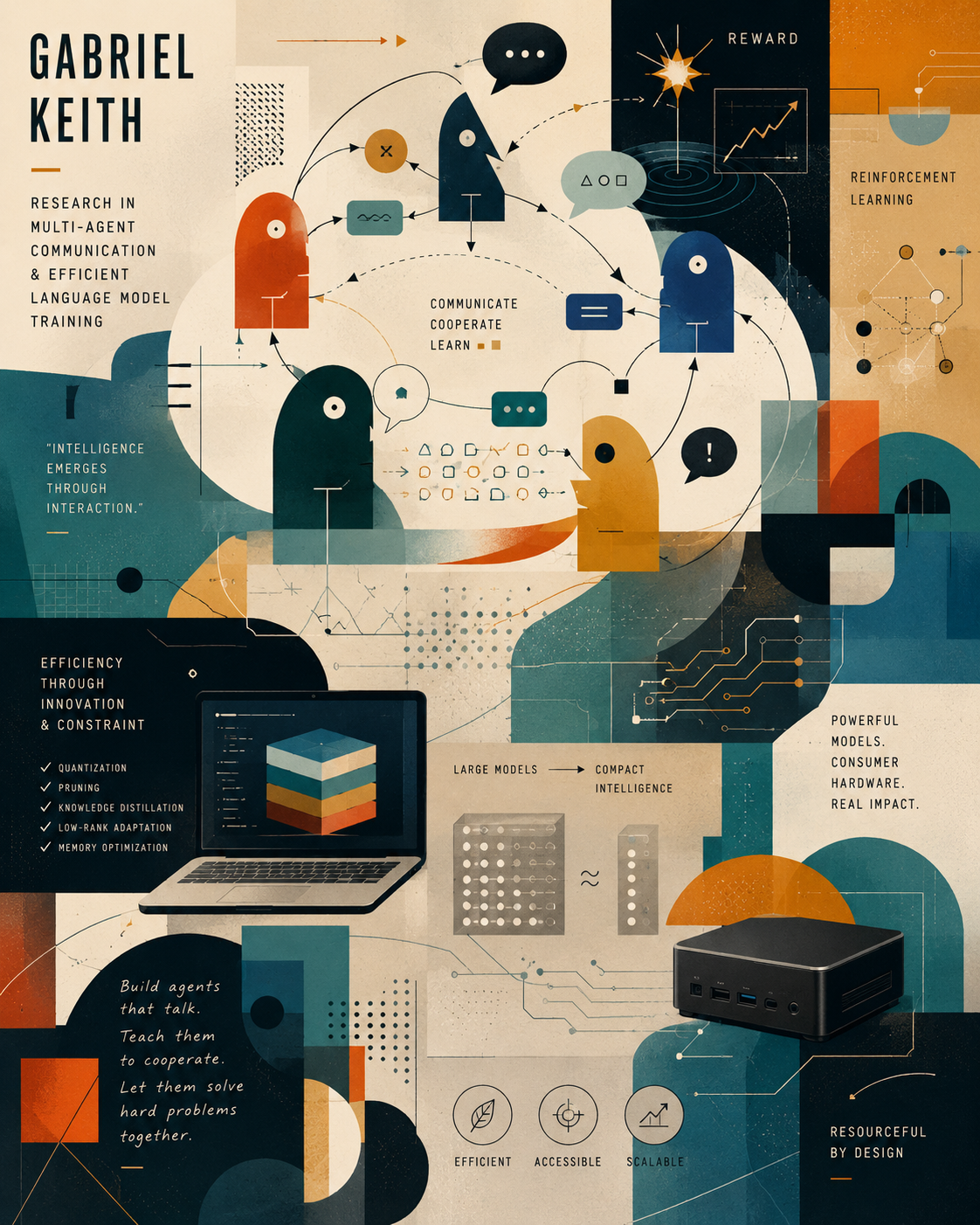
My son, Gabriel Keith, studies how AI agents learn to communicate and cooperate through reinforcement learning. He is also developing efficient approaches for training LLMs on consumer hardware.